Using Micro-Sourcing and Digital Speed to Win Against Fast Fashion and Inventory Risk
The 90-Day Production Cycle is a Profit Killer
For decades, the global fashion supply chain operated on the “predict and pray” model: forecast demand 6 to 9 months out, place a massive order in Asia, wait 90+ days for delivery, and then hope the trends haven’t changed.

In today’s volatile market—driven by unpredictable consumer behavior and the hyper-speed of social media trends—this long-lead cycle is no longer a viable strategy; it’s an inventory crisis waiting to happen.
The cost of waiting is devastating:
- The Markdowns: Massive overstock requires heavy discounting, eroding margins.
- The Stockouts: Missed opportunities when a trend explodes, and you can’t re-order quickly enough.
- The Waste: Producing goods that nobody wants, contributing to textile waste.
The solution isn’t just to be “faster”—it’s to be agile, data-driven, and proximate. This is the core principle of the 7-Day Advantage.
What is the 7-Day Advantage?
The 7-Day Advantage refers to the ability to drastically reduce the time from identifying an in-season consumer trend to receiving a replenishment or small-batch order of finished goods.
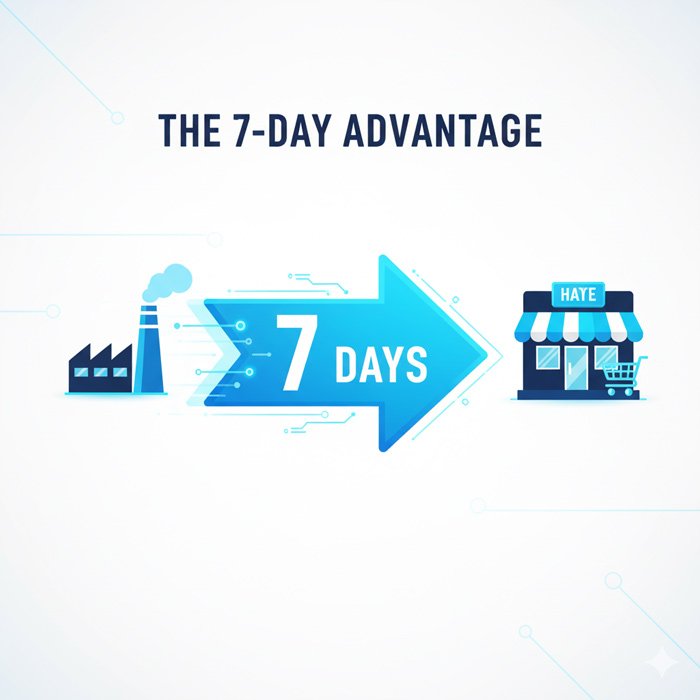
This shift is achieved by combining two critical modern sourcing strategies: Micro-Sourcing and Digital Supply Chain Integration.
1. The Core: Micro-Sourcing through Proximity
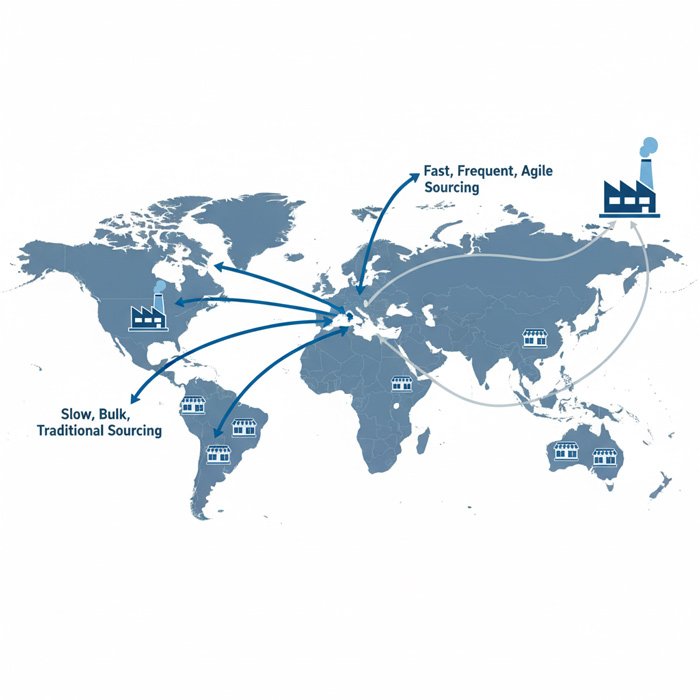
Micro-sourcing moves away from annual, high-volume contracts with a single mega-factory. Instead, it involves building strategic partnerships with agile, nearshoring manufacturers, like those in high-speed hubs closer to your end markets in the US, Europe, or Australia.
Why Proximity Matters for Micro-Sourcing:
- Small, Frequent Orders: You can place smaller initial orders to test the market, reserving capital.
- Rapid Replenishment: If a product takes off, you can place a fill-in order and receive it in weeks, not months. This is where the “7-Day” lead time (or a slight variation) becomes possible for highly efficient partners.
- Cost Efficiency is Redefined: While the unit cost might be slightly higher than deep-sea freight, the reduction in markdowns, stock-outs, and warehousing costs dramatically increases your overall profitability and Cash Conversion Cycle. Selling 100% of your stock at full price is the ultimate profit driver.
2. The Engine: Digital Speed and Smart Manufacturing
Micro-sourcing is just a location change; digital technology is what supercharges it into the 7-Day Advantage. Modern manufacturers are no longer just cutting and sewing; they are technology integrators.
AI-Driven Forecasting: Leveraging data analytics and AI to read real-time consumer sentiment (social media, website traffic, sell-through rates) to refine forecasts mid-season.
Digital Sampling & 3D Prototyping: Eliminating the weeks-long process of shipping physical samples back and forth. Digital prototypes allow for immediate approval and pattern changes.
Real-Time Visibility: Cloud-based platforms give you, the brand owner, a dashboard view of your order status, material consumption, and production line efficiency, eliminating information lag.
This integration of data and speed allows for Just-In-Time (JIT) production to become a reality in the apparel sector, reducing the need to hold expensive “inventory insurance” (overstock).
The Profit Payoff: How Agility Boosts the Bottom Line
Shifting to the 7-Day Advantage fundamentally changes your financial model:
| Traditional 90+ Day Cycle | The 7-Day Advantage Model |
| Inventory Risk | High. Capital is tied up in goods based on old forecasts. |
| Markdowns | High, often 30-50% of stock sold at a discount. |
| Cash Cycle | Slow. Money is locked in containers/warehouses for months. |
| Response Time | Up to 120 days to react to a sudden trend. |
In an economic climate where consumers are value-conscious, the ability to deliver the right product at the right time—without the profit-killing need for emergency air freight or deep clearance sales—is the definition of competitive advantage.
Next Steps for Brand Owners
Don’t wait for your next inventory crisis. To capture the 7-Day Advantage, you must:
- Demand Digital Integration: When sourcing a manufacturer, look for partners who offer real-time production visibility and digital approval workflows.
- Start Small: Identify key product categories that are highly trend-dependent (e.g., fast fashion styles, seasonal color-ways) and pilot a micro-sourcing strategy.
- Prioritize Speed over Lowest Unit Cost: Understand that a higher cost of manufacturing is irrelevant if you avoid selling 30% of your inventory at a 50% discount. The total cost of ownership is what truly matters.
The ability to operate at digital speed is the new inventory insurance. Partner with a manufacturer built for agility to transform your supply chain from a liability into your greatest asset.